Rhinoplasty FAQs
What to expect during rhinoplasty surgery?
Your rhinoplasty is performed under general anesthesia, ensuring your comfort. Dr. Diaz uses incisions made inside the nostrils to avoid any visible scarring. After surgery, you’ll be transferred to our on-site recovery room, where your family can join you. Our attentive staff will monitor your progress and provide detailed aftercare instructions before you head home.
How long will I be swollen after rhinoplasty?
Most visible swelling subsides within 4 weeks. Your nose will continue to refine and settle into its final shape during this time. Be patient, as the full results of your rhinoplasty may take 12-18 months to fully manifest.
Will I have visible scars from my rhinoplasty?
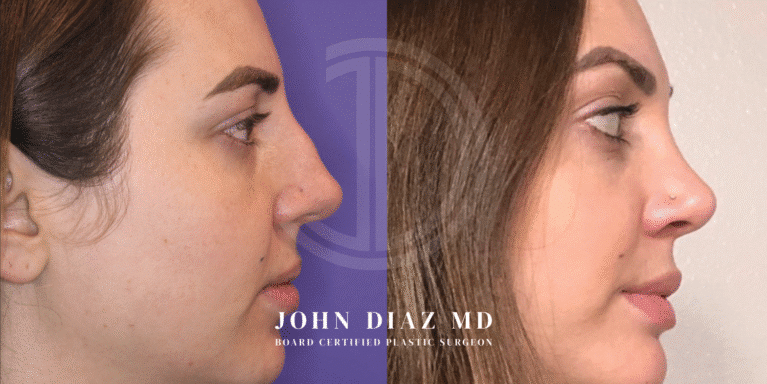
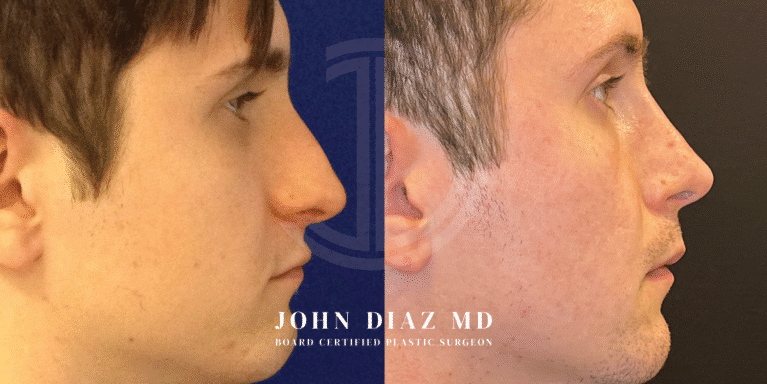
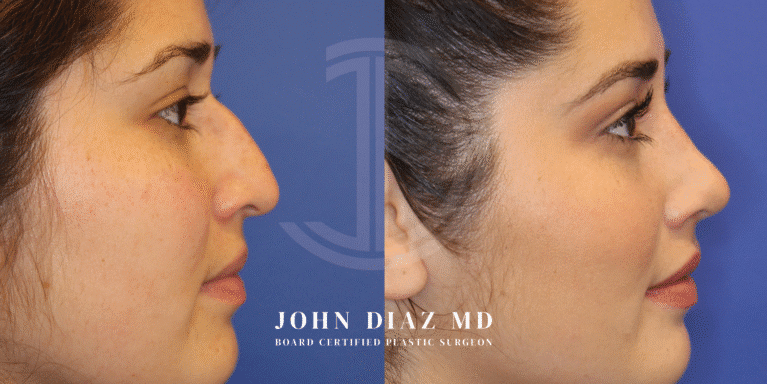
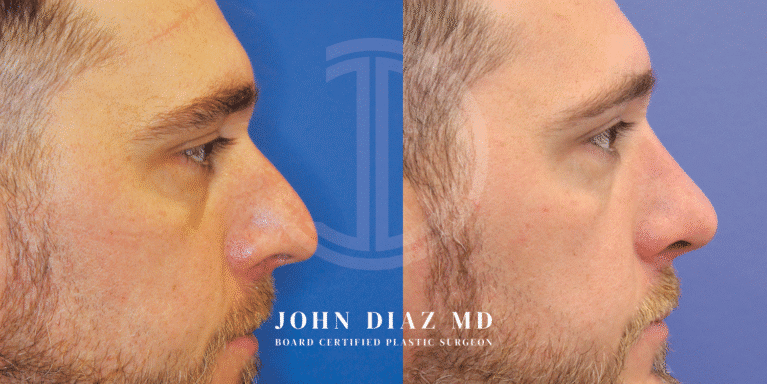
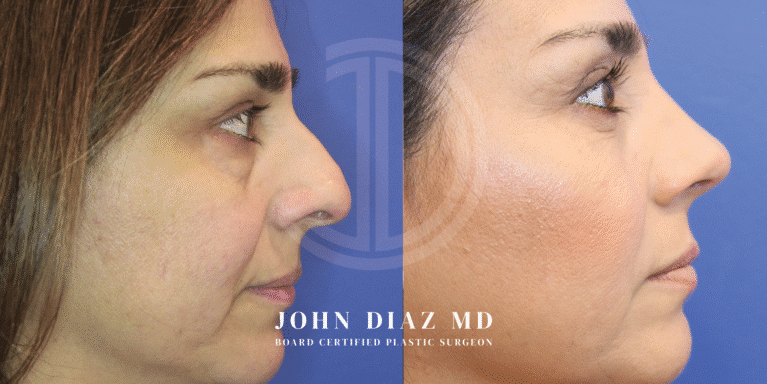
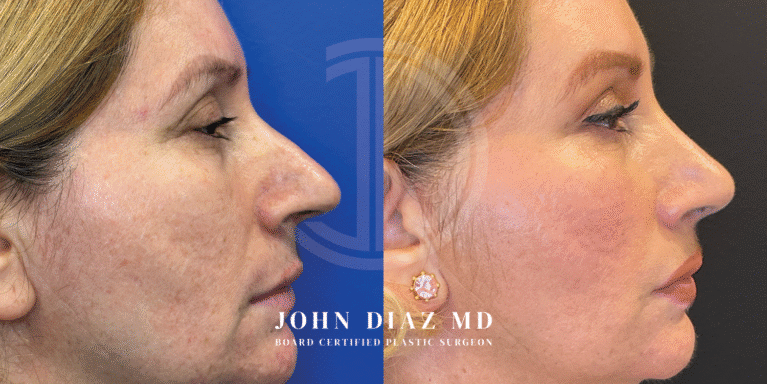
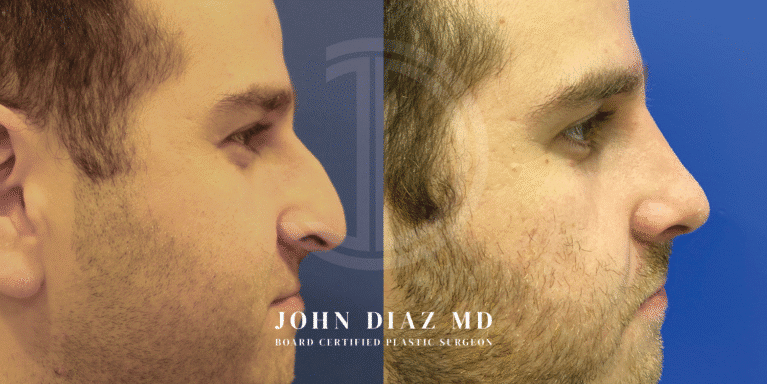
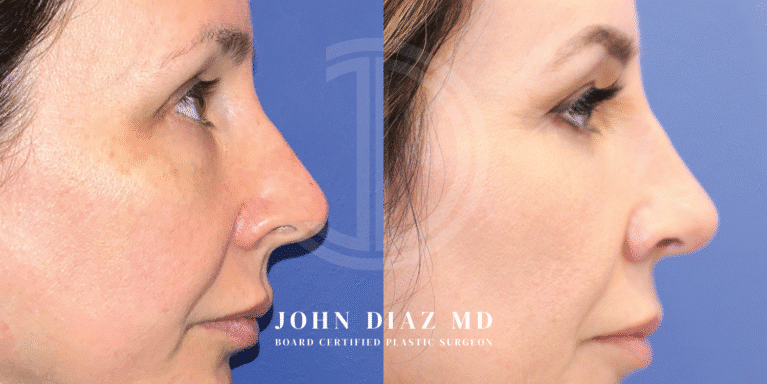
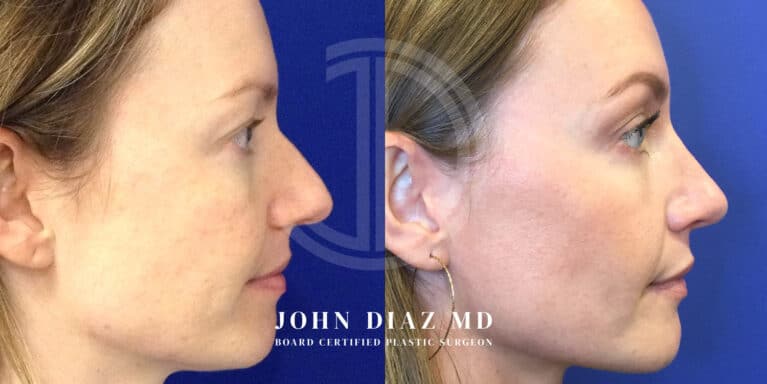
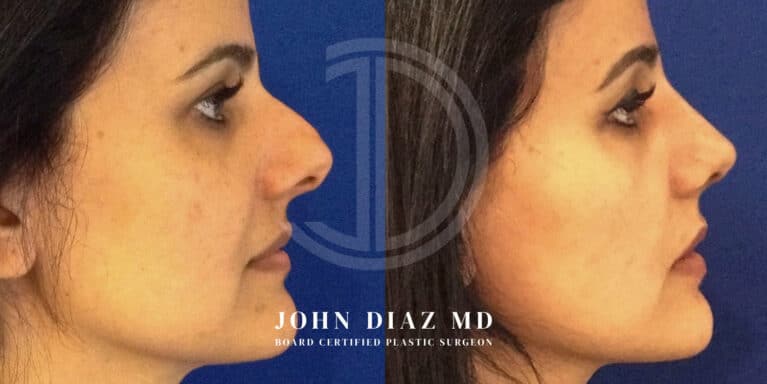
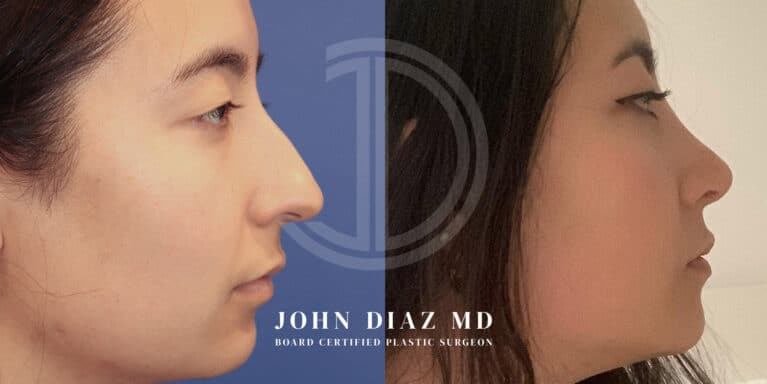
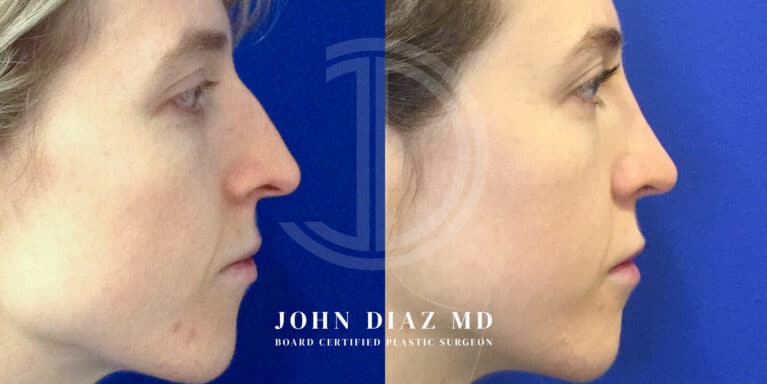
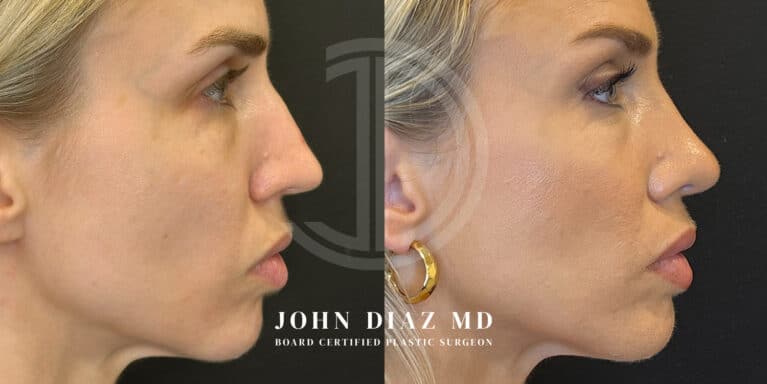
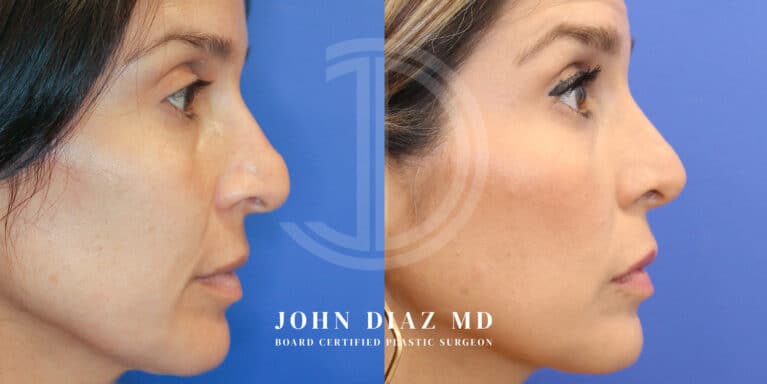
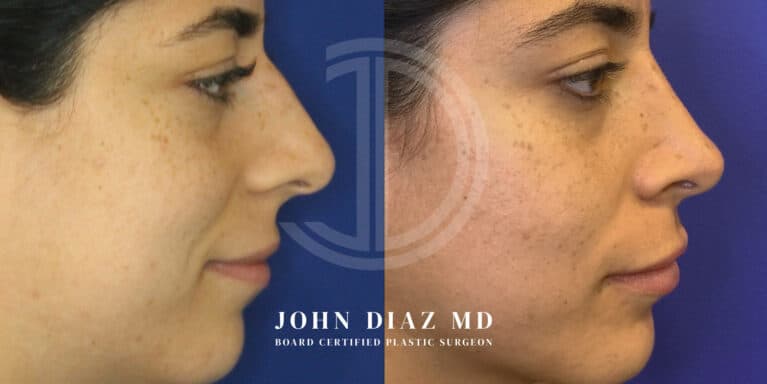
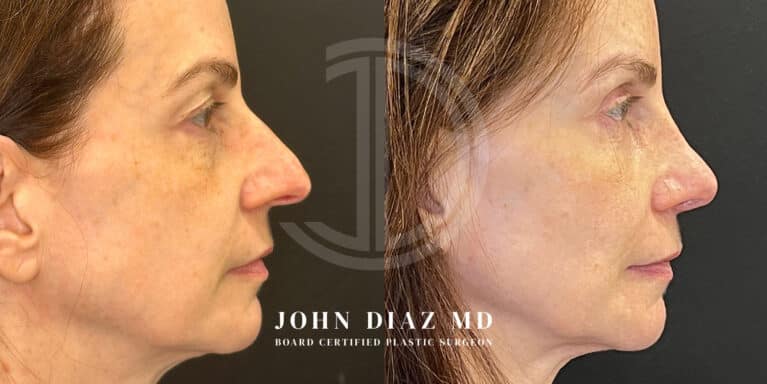
Dr. Diaz’s preferred approach is the “closed approach” since it utilizes scars made inside of the nose. The scars can not be seen in this position and it is why his technique is referred to as the “Invisible Rhino.”
How much does a nose job cost in Los Angeles?
In Los Angeles, rhinoplasty costs typically start at $10,000 and increase above that depending on the surgeon’s expertise and the complexity of the procedure. This reflects Dr. Diaz’s extensive experience and our fully accredited surgical facility. Remember, investing in a skilled surgeon often leads to better results and can help avoid costly revisions. We offer flexible financing options to help make payments more manageable for your budget.
Can I wear glasses after rhinoplasty?
Avoid resting glasses on your nose for 3-4 weeks post-surgery for best results. During this time, you can use tape to attach your glasses to your forehead or opt for contact lenses instead. After 3-4 weeks, you can gradually reintroduce wearing glasses, starting with short periods and increasing as comfort allows.
When can I exercise after rhinoplasty?
Light activity can resume after 1-2 weeks, but avoid strenuous exercise for about 4 weeks. This includes avoiding activities that increase blood pressure to your face, such as bending over or lifting heavy weights. Always listen to your body and Dr. Diaz’s specific instructions for your case.
Will rhinoplasty change my smile?
Temporary changes may occur due to swelling, but your smile should return to normal within a few months. Some patients may notice slight changes in upper lip movement, but this typically resolves as swelling decreases and tissues settle.
How long do I need to take off work?
Most patients return to work after 2 days if they work remotely and 7 days if they work in an office. If your job involves physical labor or being in the public eye, you might need more time off. Dr. Diaz will provide personalized recommendations based on your specific procedure and recovery progress.
Can rhinoplasty help with my snoring?
If snoring is due to nasal obstruction, rhinoplasty combined with septoplasty may help. However, not all snoring is caused by nasal issues. A thorough evaluation is necessary to determine if rhinoplasty could potentially improve your snoring.
Is rhinoplasty painful?
Rhinoplasty recovery is much easier than people think. In general, it is not a painful procedure. In fact, most patients will report that the recovery is similar to having a cold. There will be stuffiness of the nose, along with some discomfort around the nose, but pain is rarely reported. Medications will be prescribed to manage any discomfort, and many patients find that over-the-counter pain relievers are sufficient after the first few days
Can I combine rhinoplasty with other procedures?
Yes, rhinoplasty is often combined with procedures like chin augmentation or neck liposuction to enhance the overall facial balance. Combining procedures can often lead to synergistic results. Dr. Diaz can discuss which combination of procedures will work best for you.
What are the risks or potential complications of rhinoplasty surgery?
Rhinoplasty is generally safe and potential risks are the same as for any other cosmetic surgery. Choosing a board-certified plastic surgeon reduces these risks significantly.
When will I see the final results of my rhinoplasty (nose shape, swelling, refining)?
Most swelling improves within a few weeks. Patients often look very good and can socialize, appear in videos and take pictures at around 1 month. However, the final refined shape and details of the nose can take 6–12 months to resolve
What type of anesthesia is used for rhinoplasty?
Rhinoplasty is typically performed under general anesthesia to ensure maximum comfort and safety.
How does rhinoplasty affect breathing and nasal function — will I still breathe normally?
Most patients breathe normally after healing, and many actually experience improved airflow if functional issues were corrected during surgery.
How long until internal swelling (inside the nose) goes down completely?
Internal swelling gradually improves over several months, with full resolution often taking up to a year.
Can rhinoplasty fix a deviated septum or breathing problems?
Yes, rhinoplasty can be combined with septoplasty to straighten the septum and address structural issues that cause breathing difficulties.
Is there an age minimum or ideal age for rhinoplasty?
Rhinoplasty is typically recommended once facial growth is complete. However, in special circumstances, rhinoplasties can be performed at around age 15–16 for girls and 16–17 for boys—though the ideal timing depends on individual anatomy and goals.
Is my nose too big for my face?
Many people wonder if their nose appears too big compared to the rest of their facial features. Facial balance depends on several factors, including nose projection, width, and the relationship of the nose to the chin, lips, and forehead. During a consultation, surgeons often evaluate overall facial harmony rather than focusing solely on size. If you are curious about the signs of nasal imbalance and what may influence your appearance, explore this helpful guide on whether your nose looks large and what factors affect facial proportions.