Facelift Surgery FAQs
How long will I need to take off work?
If you work remotely, you can return to work in a few days. Initial swelling and bruising typically peak around day 3-4 and significantly improve within the first two weeks. Most patients return to the office or other social activities after approximately 2 weeks. The results and appearance improve each week. Patients start looking their best and returning to all activities within a month.
How much does a facelift cost?
The cost of a facelift can vary based on several factors such as, your individual anatomy, the number of areas being addressed, and the specific techniques used to achieve your desired results. During your consultation, we’ll discuss your goals and create a personalized plan that aligns with your unique needs.
Will people be able to tell I had surgery?
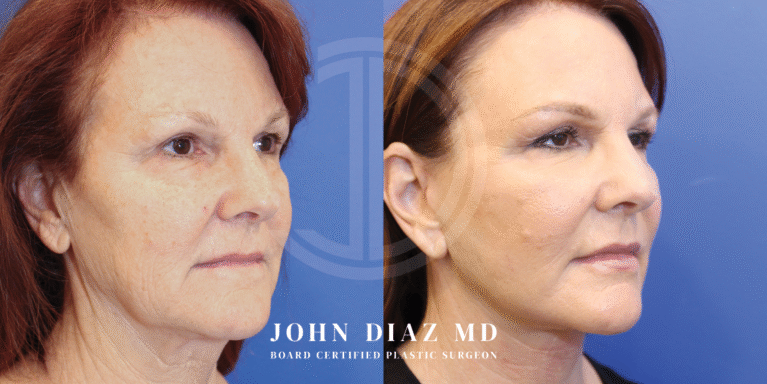
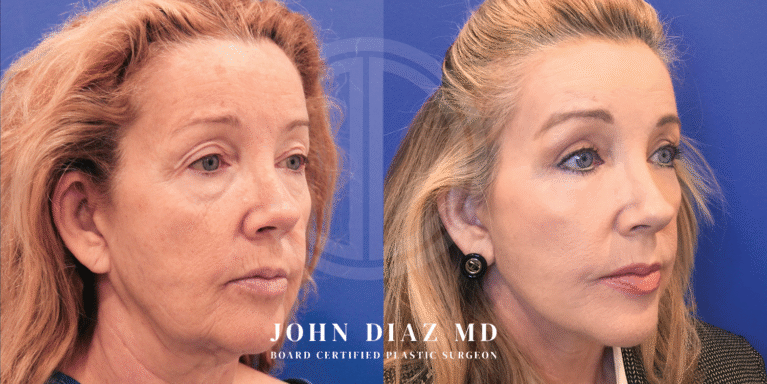
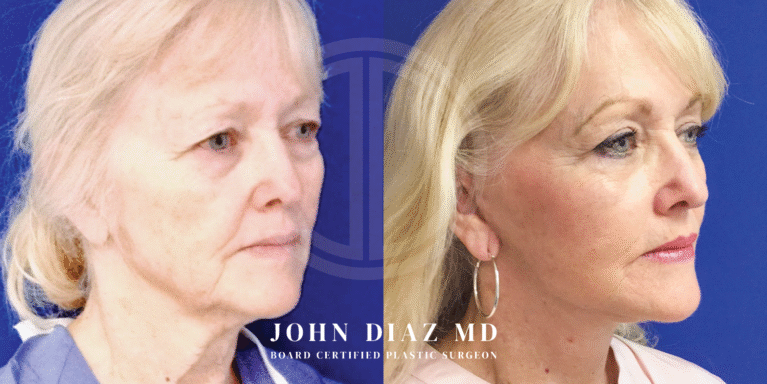
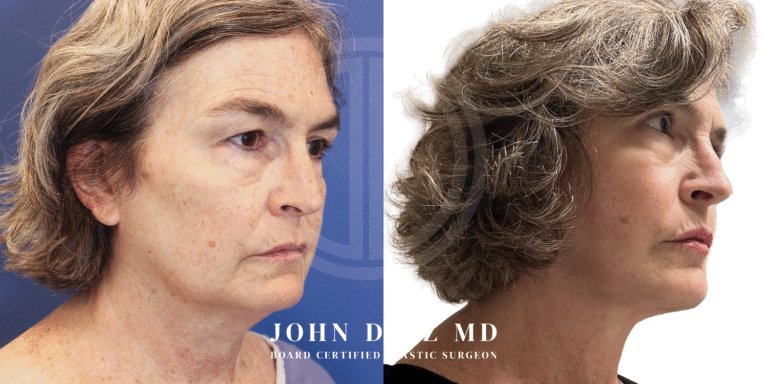
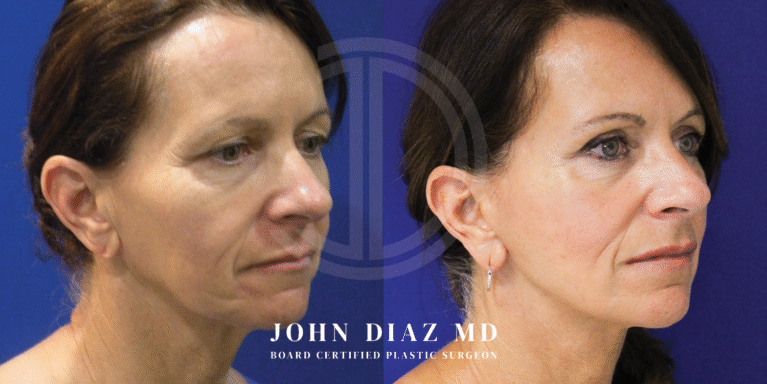
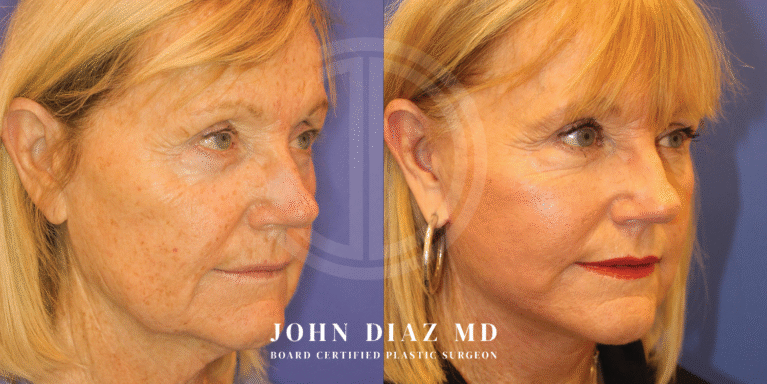
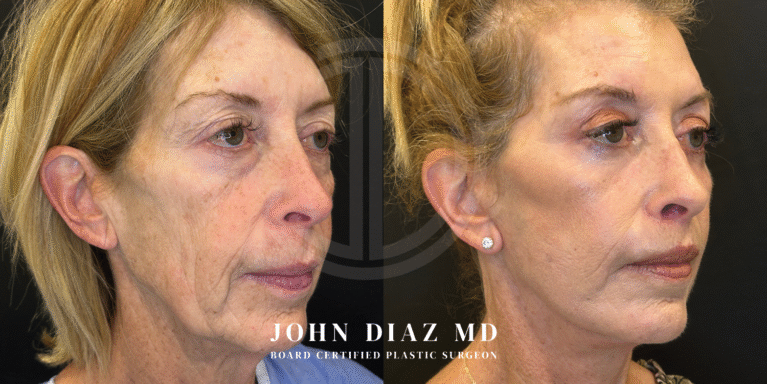
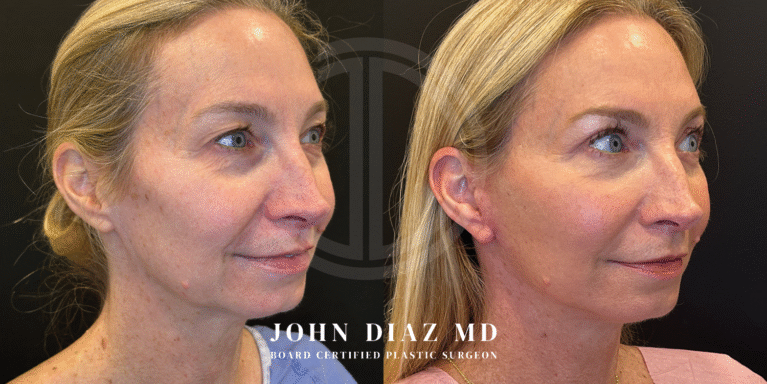
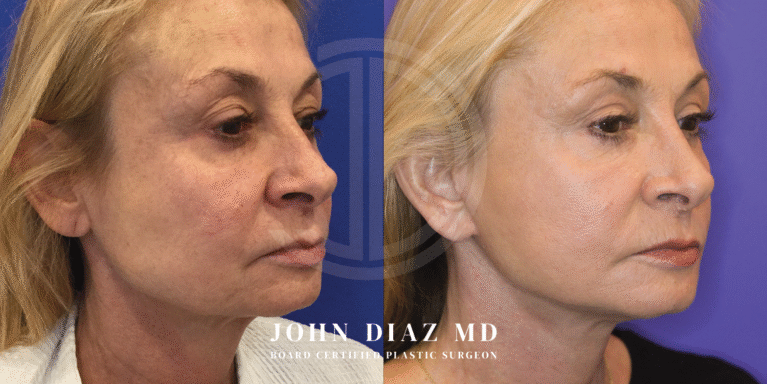
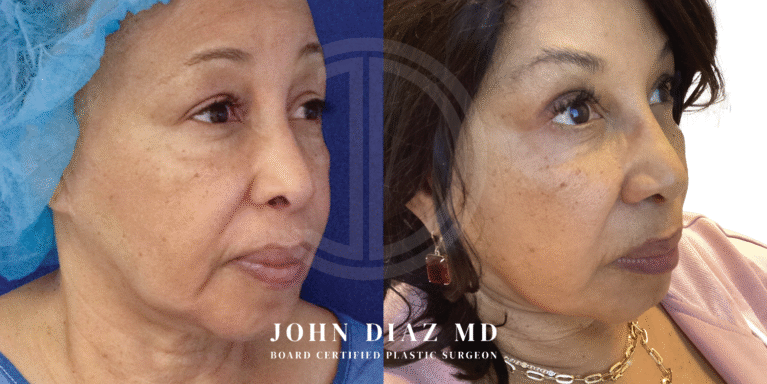
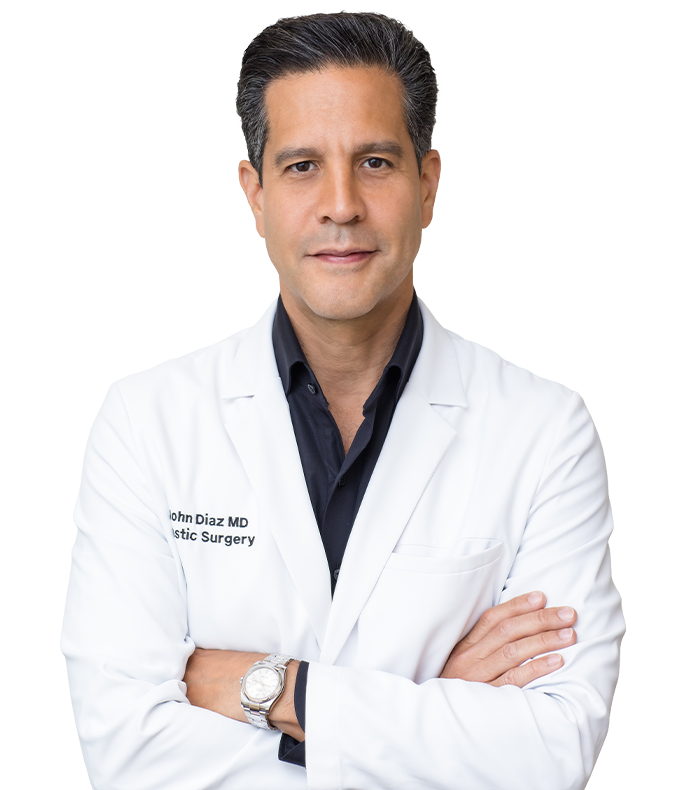
Dr. Diaz’s technique focuses on natural-looking results. Most patients report that friends and colleagues notice they look refreshed, well-rested, or younger, but can’t pinpoint exactly why. The incisions are carefully hidden within your natural hairline and facial contours. In the case of the endoscopic assisted facial rejuvenation procedure, there are no visible scars.
How painful is the recovery really?
Most patients report experiencing tightness and pressure, rather than sharp pain. Many patients only need over-the-counter pain medication after the first few days. We provide comprehensive pain management protocols to ensure your comfort.
What happens if I gain or lose weight after my facelift?
Moderate weight fluctuations (10-15 pounds) typically won’t significantly impact your results. However, substantial weight changes can affect your facial appearance. Maintaining a stable weight will help preserve your results longer.
Will a facelift affect my facial expressions?
Dr. Diaz’s technique preserves natural facial movement and expressions. You’ll still look like yourself and maintain all your natural expressions – you’ll just look like a younger, refreshed version of yourself.
What’s the right age to get a facelift?
There’s no “perfect” age for a facelift. The right timing depends on your aging patterns, skin quality, and personal goals. While most patients are between 45-65, we evaluate each case individually. Some patients benefit from earlier intervention, while others maintain good skin quality into their 70s.
What can I do to ensure the best possible results?
Following pre- and post-operative instructions carefully is crucial. This includes stopping smoking, maintaining good nutrition, avoiding certain medications, and following our recovery protocols. We’ll provide detailed guidelines and support throughout your journey.
What are the risks or potential complications of a facelift surgery?
Facelift surgery, when performed properly, is a safe procedure. Risks are similar to other surgeries and include bleeding, infection and scarring. During a consultation, Dr. Diaz will explain all of the risks in detail and all of the ways he avoids these risks to ensure a great outcome.
How long until I see final results after a facelift?
Patients see improvements in the contours immediately. Most swelling improves within 3-4 weeks. Most patients look very good and are able to socialize after a month. However, the final, refined results typically appear around the 3–6 month mark as tissues settle.
What type of anesthesia is used for a facelift?
Facelifts are performed under general anesthesia for patient comfort and safety, administered by Dr. Diaz’s board-certified anesthesia team.
How long do facelift results typically last, and what affects longevity?
Results are permanent. That is, patients who undergo facelifts will always look younger than their friends who do not. Time and gravity will continue to cause tissues to relax and descend so many patients like to repeat a facelift after 10–15 years to maintain results. Of course, this varies per patient and depends on skin quality, age, lifestyle, and genetics.
What should I do during recovery to optimize healing (care, sun protection, sleeping position)?
Patients are provided with a regimen of supplements and topical creams to enhance recovery. Dr. Diaz’s post-operative instructions all help reduce swelling and support smooth healing.
Can I combine a facelift with other procedures (neck lift, eyelid surgery, fat grafting)?
Yes — Dr. Diaz frequently combines facelifts with neck lift, eyelid surgery, or fat grafting to create a balanced, more comprehensive facial rejuvenation.
Will a facelift affect my ability to make facial expressions or natural movement?
No — Dr. Diaz’s technique lifts deeper structures in a natural direction to preserve natural facial movement and expressions.
Is there an ideal age or skin condition for a facelift to get best results?
Most patients are in their 40s–60s, but candidacy depends more on skin laxity, jowling, and neck aging rather than age alone.
What lifestyle changes after surgery help maintain facelift results long-term?
Maintaining a stable weight, avoiding smoking, protecting skin from the sun, and following a medical-grade skincare routine help results stay fresh longer.