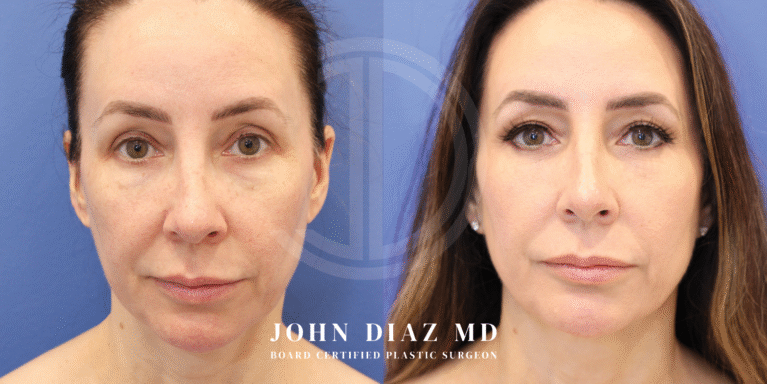
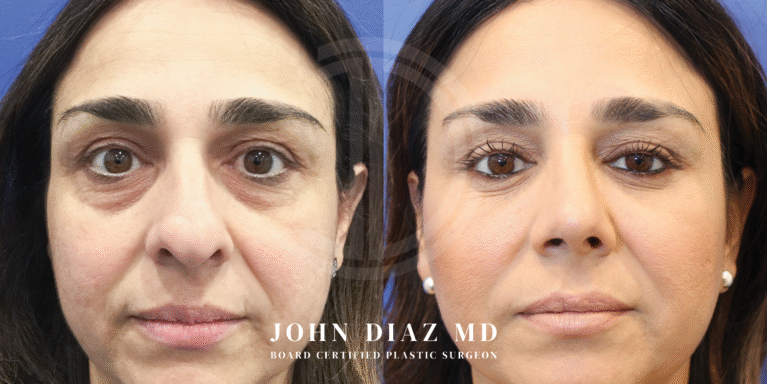
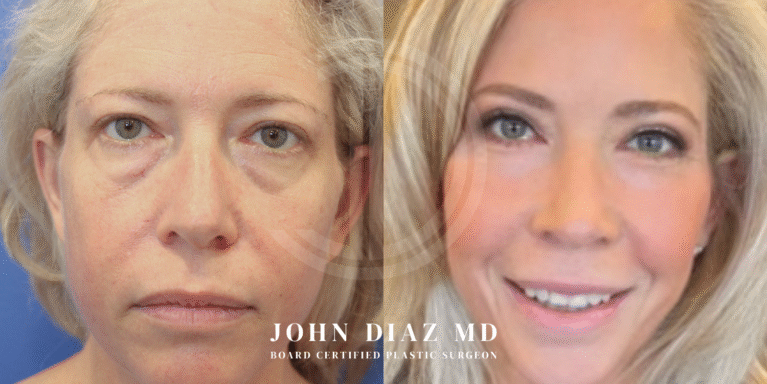
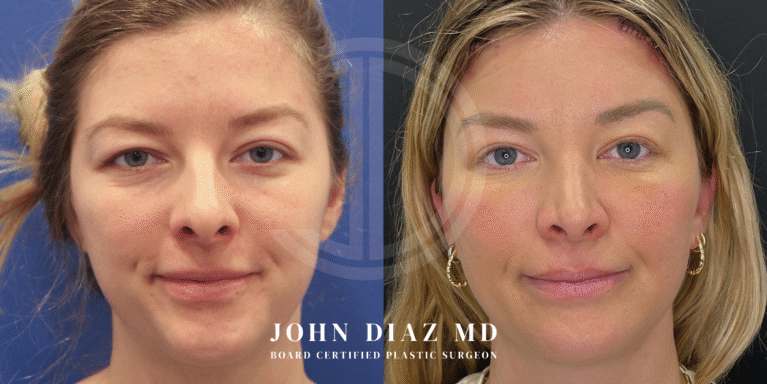
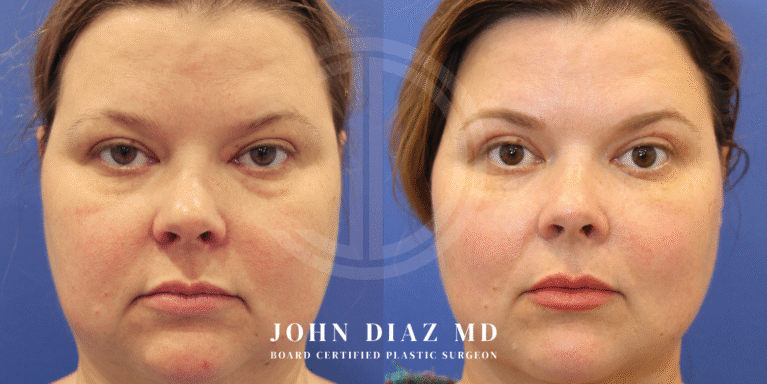
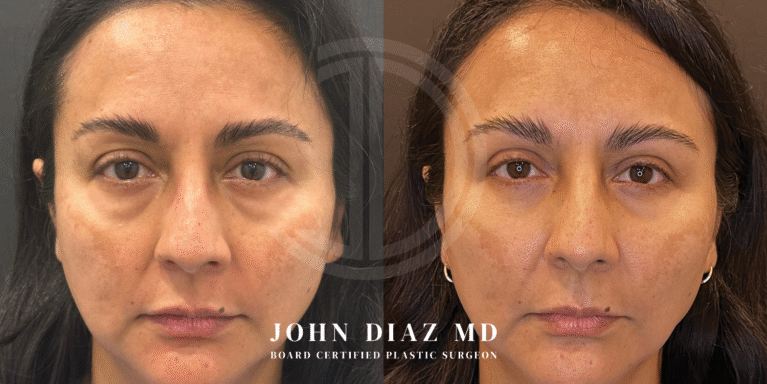
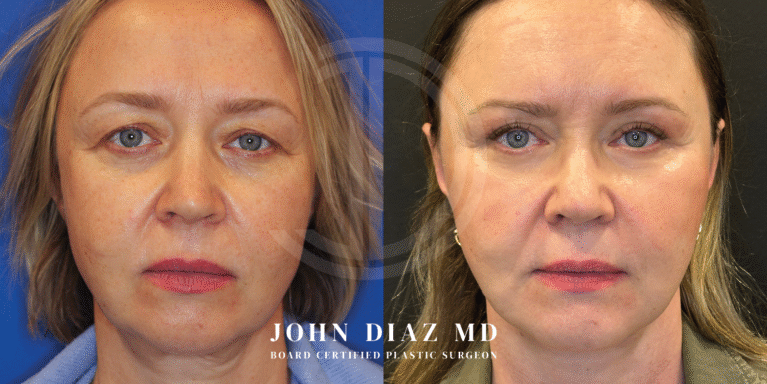
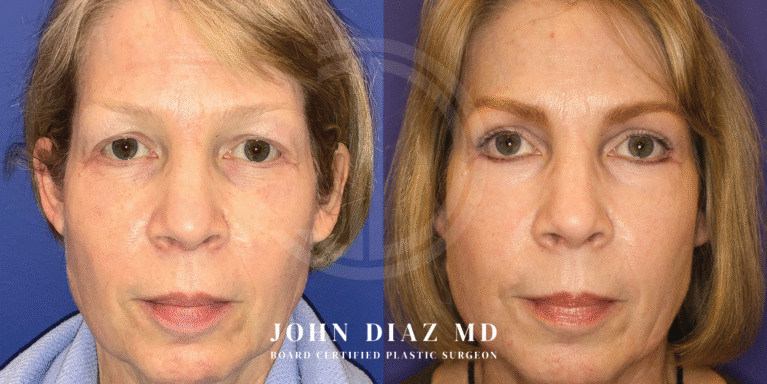
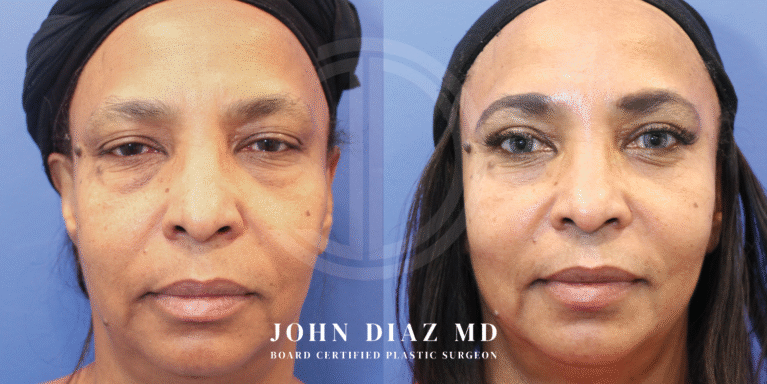
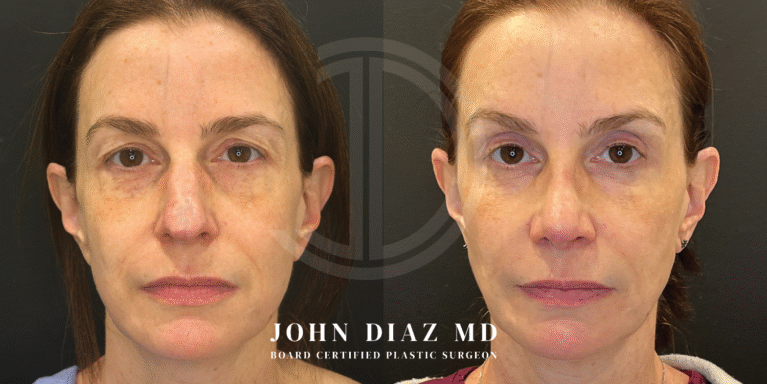
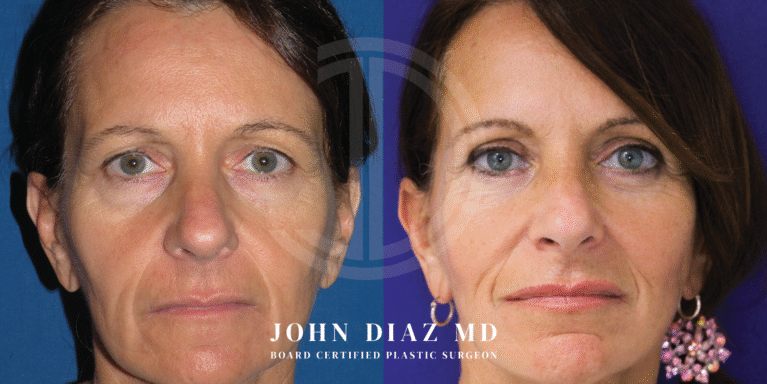
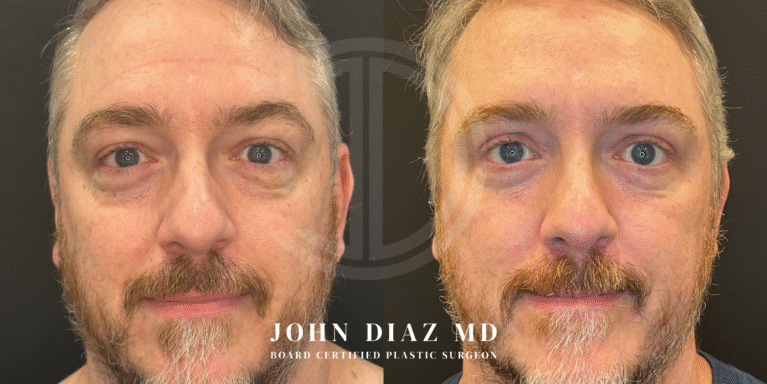
Eyelid Surgery FAQs
What is the difference between upper and lower blepharoplasty?
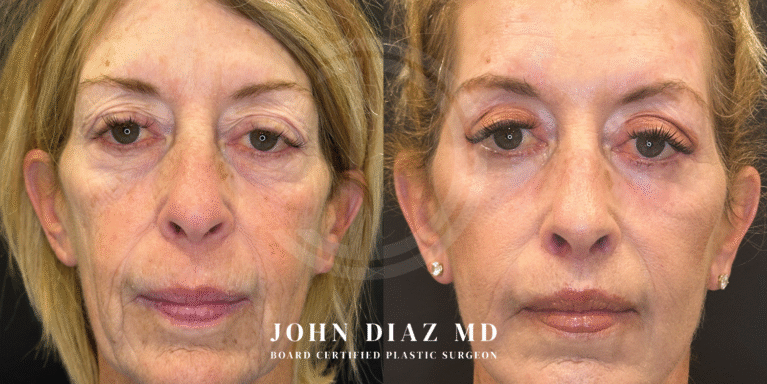
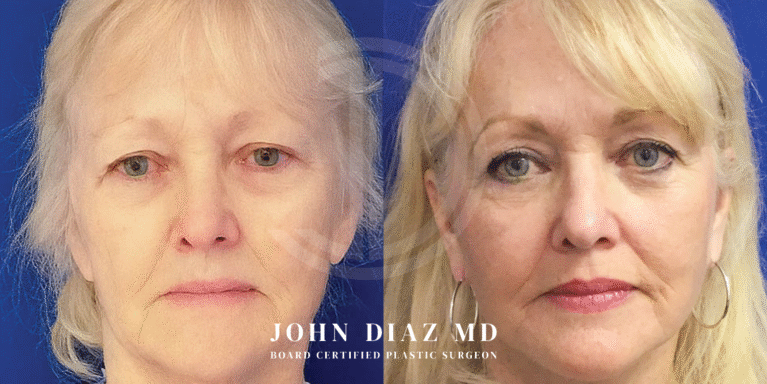
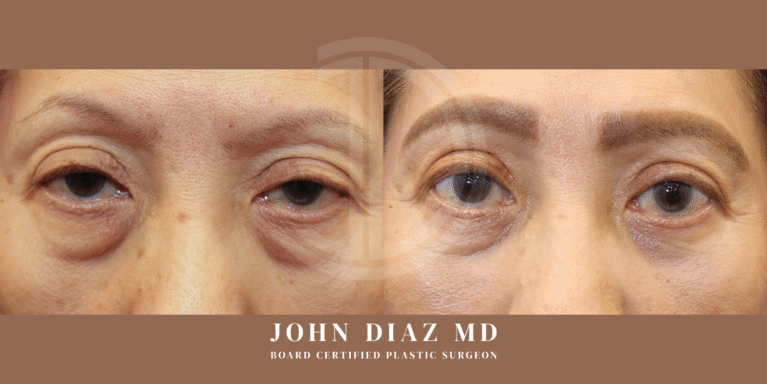
Upper blepharoplasty addresses excess skin and fat in the upper eyelids that can create a hooded appearance or interfere with vision. Lower blepharoplasty targets under-eye bags, puffiness, and sometimes loose skin in the lower eyelid area. Many patients benefit from both procedures performed together for comprehensive eye rejuvenation. Dr. Diaz will assess your specific needs during consultation to recommend the best approach.
How visible will my scars be after eyelid surgery?
Dr. Diaz places incisions strategically to minimize visible scarring. Upper eyelid scars are hidden in the natural crease and become virtually invisible once healed. Lower eyelid incisions are placed inside the eyelid, making them invisible. The blepharoplasty scar is considered to be one of the least noticeable scars in all of cosmetic surgery.
What is recovery like after eyelid surgery?
Most patients experience mild swelling and bruising for the first week after surgery. Ice packs and keeping your head elevated help minimize these effects. Many patients return to work within 7-10 days, though you may want to plan for additional time if your job requires public interaction. Stitches are typically removed within one week. Full results become apparent as swelling completely resolves over 1-3 months.
Can eyelid surgery improve my vision?
In cases where excess upper eyelid skin significantly droops and blocks peripheral or central vision, upper blepharoplasty can indeed improve your field of vision. This functional improvement is often covered by insurance when medical necessity is documented. Dr. Diaz will assess whether your eyelid concerns are purely cosmetic or if there’s a functional component that could benefit from surgical correction.
Will eyelid surgery help with crow’s feet or brow sagging?
Eyelid surgery primarily addresses skin and fat issues within the eyelid area itself. While it can create a more youthful appearance, it doesn’t treat crow’s feet (which respond better to Botox) or significant brow sagging (which may require a brow lift). During your consultation, Dr. Diaz may recommend complementary treatments to achieve your overall aesthetic goals for the eye area.
How long do eyelid surgery results last?
Eyelid surgery results are long-lasting, with most patients enjoying their improved appearance for 10-15 years or more. While the natural aging process continues, the improvements from blepharoplasty are permanent in the sense that your eyes will always look younger after blepharoplasty than they would look without blepharoplasty. Maintaining good skincare and sun protection can help preserve your results for many years.
Am I a good candidate for eyelid surgery?
Ideal candidates for blepharoplasty include individuals with excess eyelid skin, under-eye bags, or drooping eyelids that make them appear tired or aged. You should be in good overall health, have realistic expectations, and be bothered by the appearance of your eyelids. Some patients also qualify when drooping upper lids interfere with their vision. Dr. Diaz will evaluate your candidacy during a comprehensive consultation.
Can I combine eyelid surgery with other procedures?
Yes, eyelid surgery is commonly combined with other facial rejuvenation procedures for comprehensive results. Popular combinations include brow lifts (to address forehead sagging), facelifts (for overall facial rejuvenation), or non-surgical treatments like Botox and dermal fillers. Dr. Diaz will discuss which combinations are appropriate for your goals and can safely be performed together.
How much does eyelid surgery cost in Beverly Hills?
The cost of eyelid surgery varies depending on whether you need upper, lower, or both eyelids treated, as well as the complexity of your case. In Beverly Hills, upper blepharoplasty typically ranges from $6,000 to $10,000, while lower blepharoplasty ranges from $7,000 to $12,000. Combined procedures may offer cost savings. Dr. Diaz provides detailed pricing during your consultation, and we offer flexible financing options to make your procedure more accessible.
What are the risks or potential complications of blepharoplasty surgery?
Risks are the same as for any other surgery and include bleeding, bruising, swelling and scarring. However, serious complications are rare with Dr. Diaz’s precise surgical technique.
When will I see the final results after eyelid surgery (swelling reduction, scar healing, final appearance)?
Most swelling and bruising improve within 2–3 weeks, with final results visible between 1-3 months as tissues settle and scars mature.
What type of anesthesia is used for eyelid surgery?
Blepharoplasty can be performed under local anesthesia with sedation, or general anesthesia, depending on the patient’s needs and comfort.
Are there age or health conditions that make someone a poor candidate for blepharoplasty?
Patients should be in good overall health; uncontrolled medical conditions, severe dry eyes, or unrealistic expectations may make surgery unsuitable.
What should I avoid (sun exposure, heavy lifting, screen time, makeup, contact lenses) during recovery for best results?
Patients should avoid direct sun, strenuous exercise, heavy lifting, and eye makeup or contact lenses until cleared by Dr. Diaz to ensure proper healing.
How long should I wait before I can wear makeup or contact lenses again?
Most patients can safely resume makeup or contact lenses about 1–2 weeks after surgery, following Dr. Diaz’s post-op instructions.
Will my eyelid surgery affect my ability to cry, blink, or close my eyes naturally?
No — Dr. Diaz’s technique preserves eyelid function, so patients maintain normal blinking, closing, and tear drainage after healing.