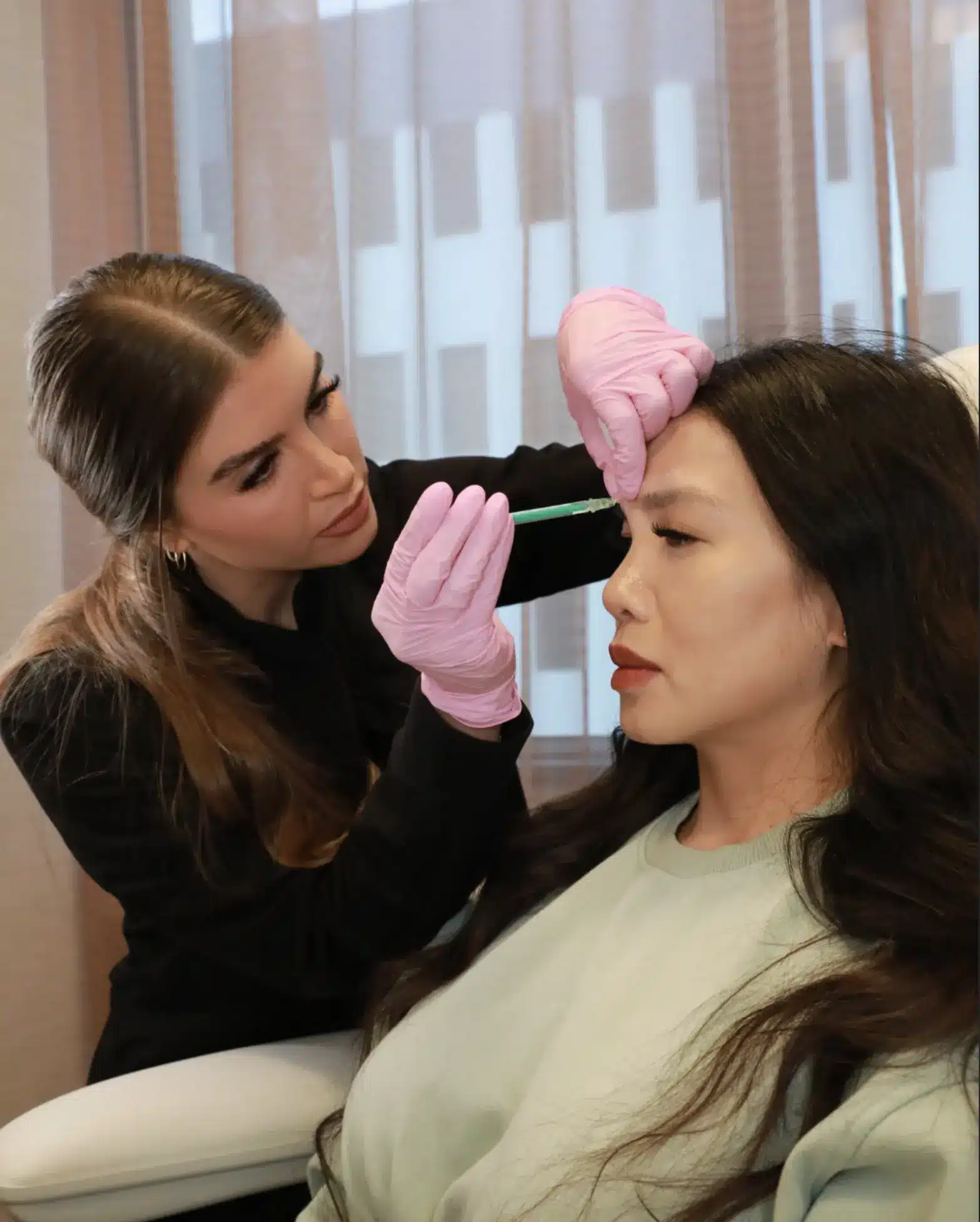

The quiet advantage that reveals itself over years
When Botox is performed consistently over years, something significant happens. The muscles that drive expression lines gradually lose their dominance. The skin above those muscles recovers thickness and elasticity that repetitive folding had been slowly eroding. The face does not freeze. It settles into a calmer, more rested version of itself.
I have watched this transformation unfold in my own patients across five, eight, and ten year spans. The difference between someone who began Botox at thirty five and someone who waited until forty five is visible. Not because one person looks artificial and the other does not. Because one person preserved what they had while the other is now working to recover it.
Understanding how repetitive muscle movement permanently changes skin over time
Before discussing what Botox does over a decade, it is important to understand what happens to skin when it is left to fold and crease without intervention.
Every facial expression activates specific muscles. The corrugator draws the brows together. The frontalis lifts the forehead. The orbicularis oculi contracts around the eyes. These movements are natural and necessary. However, their mechanical effect on the skin is cumulative.
Each contraction compresses the collagen and elastin fibers in the dermis directly above the muscle. Over thousands of repetitions across years, those fibers weaken and thin. The skin in that zone loses its ability to spring back. What begins as a dynamic line, visible only during expression, becomes a static line that remains even when the face is at rest.
This process is not sudden. It unfolds gradually across the late twenties and thirties, accelerating in the forties and fifties depending on genetics, sun exposure, and skin type. By the time a static line is deeply established, the dermal damage beneath it is structural.
| Key principle: Botox does not simply erase lines. It interrupts the mechanical cycle that creates and deepens them. When that cycle is interrupted early and consistently, the skin retains its structural integrity far longer than it would on its own. |
What happens biologically when a muscle is consistently relaxed for years
Botulinum toxin works by temporarily blocking the signal between the nerve and the muscle. The muscle cannot contract with its usual force, so the overlying skin rests. This is well understood.
What receives less attention is the long term adaptation that occurs when this process is repeated consistently.
Muscle volume gradually decreases
A muscle that is regularly relaxed does not maintain its full bulk. Over years of consistent treatment, the targeted muscles undergo a mild, controlled atrophy. They become thinner and less forceful. This is not weakness. It is refinement. The muscle still functions, but it no longer dominates the overlying tissue.
Patients who have maintained Botox in Beverly Hills with me for several years often notice that they need fewer units over time. The muscle has simply adapted to a quieter state.
Collagen and elastin fibers have time to recover
When the mechanical stress of repeated folding is reduced, the dermis has an opportunity to repair. Collagen fibers reorganize. Elastin regains some of its spring. The skin in zones that were previously under constant compression begins to thicken slightly and smooth.
This is not speculation. Published dermatology research has shown measurable increases in skin elasticity and dermal thickness in patients who maintain regular neuromodulator treatments over multiple years. The skin literally becomes healthier when it is allowed to rest.
Expression becomes more nuanced rather than more rigid
A common fear is that long term Botox will eliminate expression. In my experience, the opposite is true when treatment is approached with restraint. Patients who have been treated consistently for years develop a more refined range of expression. The heavy furrow between the brows softens. The forehead moves gently rather than dramatically. The overall impression is calm and rested rather than static.
A realistic decade long timeline for patients who begin treatment in their early thirties
Every patient is different, but the trajectory I describe here reflects what I see most often in my Beverly Hills practice. It assumes a patient who begins treatment with moderate dynamic lines and maintains appointments consistently.
| Timeframe | What is happening | What patients notice |
| Years 1 to 2 | Dynamic lines soften within days of each session. Muscle memory begins to shift. Skin above treated areas experiences less mechanical stress. | Lines disappear when treated and return more gently between appointments. Skin looks smoother and more rested after each session. |
| Years 3 to 4 | Targeted muscles begin to thin. Collagen fibers in the treatment zone start reorganizing. Intervals between treatments may lengthen slightly. | Improvement lasts longer. Lines are softer even before the next appointment. Friends comment that the patient looks well rested. |
| Years 5 to 6 | Muscle atrophy becomes a meaningful contributor. Dermal recovery is measurable. The baseline quality of the skin has improved compared to the starting point. | The face at rest appears noticeably smoother than peers of the same age. Static lines that were forming have plateaued or reversed. |
| Years 7 to 8 | Treatment becomes more about maintenance than correction. Fewer units are often needed. Dosing patterns are well established and predictable. | Patients require less product and fewer visits while maintaining the same results. The face has settled into a quietly youthful baseline. |
| Years 9 to 10 | The cumulative benefit is structural. Skin health, muscle balance, and facial harmony reflect a decade of thoughtful care. | The difference between treated and untreated aging is unmistakable. Results appear entirely natural because they developed gradually. |
Why starting earlier produces a fundamentally different outcome than starting later
There is a meaningful distinction between preventive Botox and corrective Botox.
Preventive treatment begins before static lines have formed. The goal is to slow the mechanical process that creates them. The muscle is relaxed gently, the skin is protected from repetitive folding, and the collagen structure is preserved.
Corrective treatment begins after static lines are already established. The goal shifts to softening existing damage while preventing further progression. This is still valuable. However, the dermal injury beneath an established static line cannot always be fully reversed with neuromodulator alone. Additional treatments such as Morpheus8 or CO2 laser resurfacing may be needed to rebuild the collagen that has already been lost.
This is not about chasing youth. It is about understanding that prevention requires far less intervention than restoration. Patients who begin in their late twenties or early thirties and maintain consistency often look remarkably natural at fifty because they never allowed the deep structural damage to accumulate.
How dosing and treatment areas evolve as your face matures over a decade
A skilled injector does not apply the same treatment plan at year eight that they used at year one. The face changes, and the approach must change with it.
Early years: establishing a foundation
In the first few years, treatment typically focuses on the most active areas. For most patients, this includes the glabella, the horizontal forehead lines, and the lateral canthal lines around the eyes. Dosing is moderate and intervals are standard, usually every three to four months.
Middle years: expanding and refining
As the patient and I develop a shared understanding of their facial dynamics, we often refine the plan. This may include subtle adjustments such as a small amount of product along the jawline to address early platysmal banding or a micro dose near the lip border to soften vertical lines that are just beginning to appear.
Patients interested in jawline contouring may also explore masseter Botox for facial slimming, which complements the upper face work beautifully.
Later years: maintaining with less
By year seven or eight, many long term patients find that they need fewer units per session. The muscles have adapted. The skin is healthier. The face has a lower baseline of tension. At this stage, treatment becomes a light touch rather than a correction. This is the reward of consistency.
The areas of the face where long term Botox produces the most visible cumulative benefit
Not every area of the face responds equally to a decade of treatment. The following zones consistently show the most dramatic long term improvement.
- The glabella. The vertical lines between the brows are among the most responsive to long term Botox. The corrugator muscles are powerful but relatively small. Consistent treatment keeps them thin and prevents the deep etched lines that many patients associate with looking stern or fatigued.
- The forehead. Horizontal forehead lines respond well, though technique is especially important here. Over treating the frontalis can lower the brow position. A decade of thoughtful, conservative dosing keeps the forehead smooth while preserving natural brow height and movement.
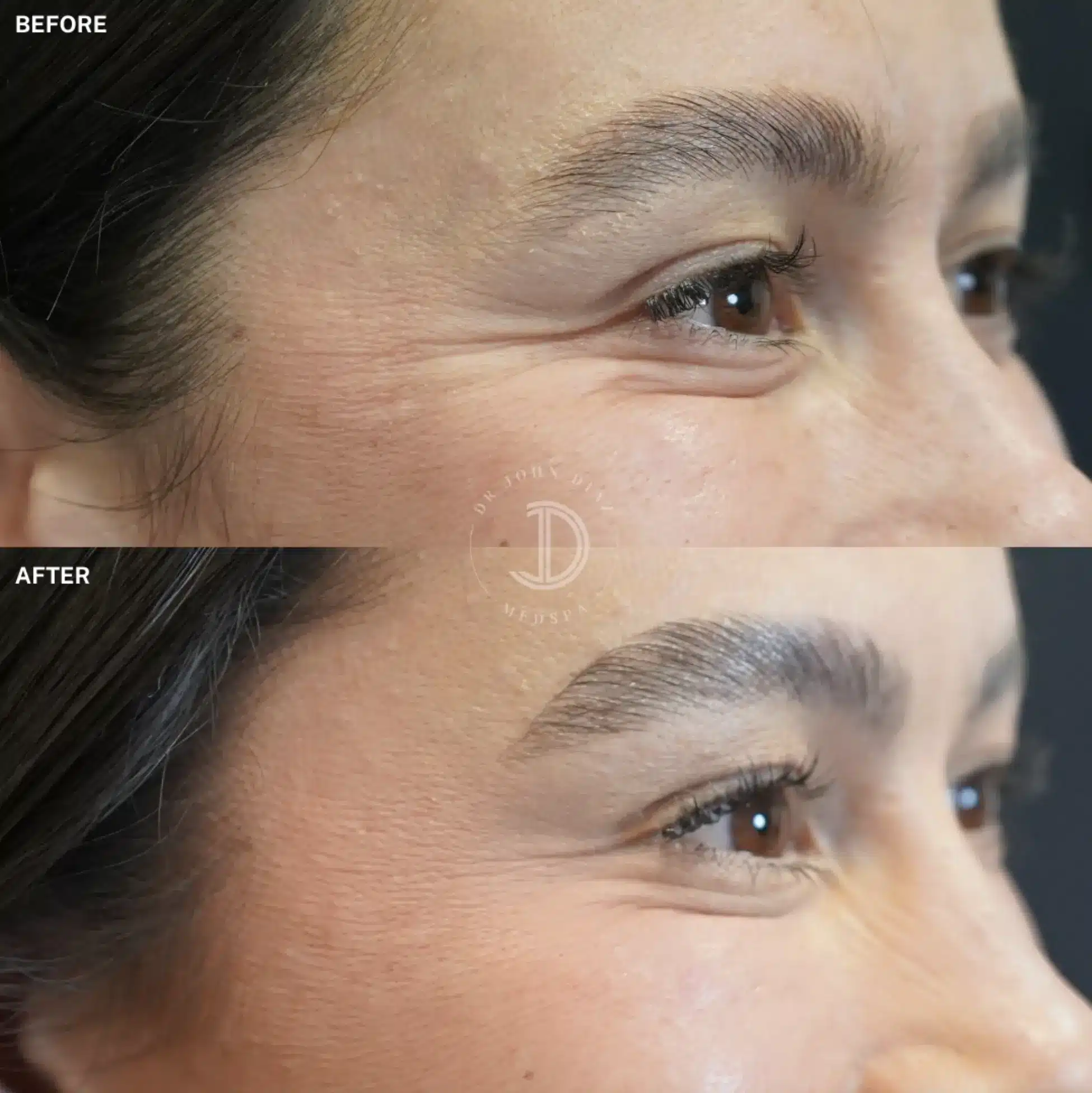
The lateral canthal lines, often called crow’s feet, also improve significantly over time. These lines respond quickly to treatment and, with consistent care, remain soft and shallow rather than deepening into permanent creases. For patients who also experience skin laxity around the eyes, a blepharoplasty may complement long term Botox by addressing excess skin that neuromodulator cannot treat.
What consistent Botox does not do and why that honesty matters
It would be irresponsible to suggest that Botox alone can prevent all visible aging. It cannot.
Botox addresses muscular movement and the skin damage caused by that movement. It does not address volume loss, skin laxity, textural changes from sun damage, or gravitational descent of the deeper facial structures.
A patient who maintains Botox for ten years will still experience age related changes in midface volume, jawline definition, and skin texture. The difference is that their upper face and expression lines will be far better preserved than they would have been without treatment.
This is why a comprehensive long term plan often includes complementary treatments. Dermal fillers restore volume where it has been lost. Sculptra and other biostimulators encourage the body to rebuild its own collagen scaffold. When the time is right, surgical options like a facelift or neck lift address what no injectable can.
The patients who age most gracefully are not those who rely on a single treatment. They are those who trust a physician to guide a multi year strategy that adapts as they change.
| A note on the physician relationship: One of the most underappreciated aspects of long term Botox is the relationship between patient and physician. Over a decade, I learn a patient’s facial anatomy, their healing patterns, their preferences, and the subtle shifts that signal a change in approach. This accumulated knowledge allows me to treat with a precision that is simply not possible in a one time visit. |
Common concerns patients raise about committing to long term treatment
No. Botox does not create physical dependence. If you stop treatment at any point, the muscles will gradually return to their previous activity level over several months. However, the structural benefit you have gained, the preserved collagen and reduced static lines, will not disappear overnight. You will simply resume the natural aging process from a better starting point.
Not when treatment is performed conservatively. The goal of long term Botox is reduced intensity of movement, not elimination of movement. I consistently aim for a result where patients can express every emotion naturally while the skin above those muscles remains smooth and supple.
In rare cases, patients may develop antibodies that reduce the effectiveness of botulinum toxin type A. This is uncommon, and alternative formulations exist. For the vast majority of patients, Botox remains effective throughout a decade of use with no diminishing returns.
Choosing an injector for a single visit is one decision. Choosing an injector for a decade is a relationship.
Over ten years, your face will change. Your skin will respond differently to treatment. Your aesthetic preferences may evolve. You may experience hormonal shifts, weight changes, or life events that alter your facial structure.
A physician who has treated you consistently across that span understands all of this. They do not start from scratch at every appointment. They build on what they know. They notice when your muscle response shifts. They adjust before problems develop. They protect what has been gained while adapting to what is new.
This accumulated understanding is, in my view, one of the most valuable things a physician can offer. It cannot be replicated by someone who sees you once.
Frequently asked questions about long term Botox treatment
There is no universal answer. I typically recommend beginning when dynamic lines are becoming noticeable at rest or when a patient wants to preserve their current appearance proactively. For many, this falls between the late twenties and mid thirties.
Every three to four months during the early years. As muscles adapt over time, some patients extend to every four to five months. Consistency matters more than frequency.
Absolutely. Botox works best as one component of a comprehensive plan. Microneedling, medical grade skincare, biostimulators, and eventually surgical options all complement the work that Botox preserves.
Often the opposite. Long term patients frequently require fewer units as their muscles adapt. Dosing becomes lighter and more refined over time.
No. Research suggests that the skin in treated areas may actually become thicker and more elastic over time, because it is freed from the repetitive mechanical stress that degrades collagen.
Botulinum toxin has been used in medicine since the 1970s and in cosmetic applications for over three decades. Its long term safety profile is well established when administered by a qualified physician at appropriate doses.
A final thought on playing the long game with your appearance
The most elegant results in aesthetic medicine are the ones nobody can identify. They do not announce themselves. They simply allow a person to look like a well rested, well cared for version of who they have always been.
A decade of consistent Botox is not about vanity. It is about stewardship. It is the decision to protect what you have while time allows, so that the interventions you need later are smaller, gentler, and fewer.
If you are considering this approach or if you have already begun and want to refine your plan, I welcome the conversation. A thoughtful consultation is the foundation of everything that follows.
When you are ready, you can request your consultation here.